A brand name is probably the most permanent decision a business will make. You can change your logo, overhaul your messaging, redesign your website, pivot your entire strategy - but changing your name? That's a different level of disruption. It touches every contract, every piece of signage, every customer relationship, every domain, every email signature. It's the one brand asset that's genuinely expensive to undo.
Which is why it's remarkable how many businesses don't give naming the strategic attention it deserves. They brainstorm for an afternoon, pick something that feels right in the moment, register the domain, and move on. Two years later, the name doesn't fit - but by then, they're stuck with it.
We think about brand naming as a discipline - one that sits at the intersection of strategy, creativity and pragmatism. Here's how it actually works when it's done properly.
What is Brand Naming?
Brand naming is the strategic process of creating a name for a business, product, service or initiative. It's harder than it looks because a name needs to pass through so many filters simultaneously - legal availability, phonetic clarity, cultural appropriateness, domain availability, and ideally, meaning that supports your brand positioning.
That's a lot of work for a single word to do. And that's before you account for the fact that everyone involved will have a personal opinion about it.
The way we think about it, a brand name is the bridge between all the intangible pieces that make up a brand - the strategy, the personality, the tone, the character, the feel - and the tangible identity that gets presented to the world. It's the thing that gets visually expressed in the logo, carried across the website, printed on documentation. And ultimately, it's what lives in people's heads. When someone recommends your business to a friend, when they search for you, when they introduce you at a meeting - the name is the vehicle for all of that.
Brand naming sits early in the brand development process, often before identity design, messaging or any visual work. The name shapes everything that follows. It influences how the logo is designed, how the brand sounds, what associations it carries and how easily people can remember and share it.
Why Brand Names Matter More Than People Think
There's a common misconception that the name doesn't matter much - that a great brand can make any name work. There's a kernel of truth in that. Google, Xerox and Apple were all meaningless or odd-sounding names before billions of dollars of brand equity were poured into them.
But those companies succeeded despite their names being challenging, not because of them. And they had the resources to overcome the initial friction that a less intuitive name creates. Most businesses don't have that luxury.
Here's a simple test. Think about your favourite coffee shop. Or your favourite car brand. What's the first thing that comes to mind? A name. Before the brand identity, before the colour palette, before the shopfront or the showroom - you pull up a name. That's the retrieval mechanism. It's how the idea of that business gets stored and shared between people. And it's why a well-chosen name does work that no other brand asset can replicate.
A well-chosen brand name gives people a reason to be curious. It hints at what you do or how you do it. It's easy to say, spell and search for. It creates positive associations rather than confusion. And it works as a foundation for the broader brand identity rather than fighting against it.
Types of Brand Names
Understanding the different types of brand names helps you make a more informed choice about which direction to pursue. Each type comes with trade-offs.
Descriptive names tell you exactly what the business does. Think General Motors, The Australian Financial Review, or PayPal. The advantage is immediate clarity - no one has to guess what you're about. The disadvantage is that they're often generic, hard to trademark, and can become limiting if the business evolves beyond its original scope. PayPal works because they stayed in payments. General Electric works less well now that they've exited most of their general electrical businesses.
Suggestive names hint at what the brand does or the feeling it creates without spelling it out directly. Pinterest suggests pinning interests. Spotify suggests spotting music. These names reward a moment of thought - they're not immediately obvious, but once you get it, they stick. This is often the sweet spot for brand naming because you get memorability and meaning without being so literal that you box yourself in.
Abstract names have no inherent meaning related to the business. Kodak, Rolex, Haagen-Dazs (which isn't even a real Scandinavian word - it was invented in the Bronx to sound European). These names are blank canvases. The brand defines them entirely through experience and marketing. They're easy to trademark because they're distinctive, but they require more investment to build meaning.
Invented names are created words that didn't previously exist. Accenture, Verizon, Spotify. They offer maximum trademark protection and zero baggage, but they require significant brand-building to establish recognition. The risk is that they can sound corporate or feel like they were generated by an algorithm - which increasingly, they are.
Founder names use the names of the people behind the business. Hewlett-Packard, Goldman Sachs, Ben & Jerry's. They carry a personal stamp of authenticity and work well for professional services, luxury goods and businesses where the founder's reputation is the brand. The downside is they don't scale well beyond the founder, and succession planning for a brand named after a person presents unique challenges.
Acronyms - IBM, BMW, KPMG - are usually the result of a name that became too long to say, not a deliberate naming choice. As a starting point for a new brand, acronyms are generally a poor strategy. They're hard to remember, impossible to trademark (usually), and carry no meaning. If you find yourself reaching for an acronym, that's often a sign the underlying name needs rethinking.
How to Come Up with a Brand Name
Here's where most people go wrong: they start with brainstorming. They gather the team in a room with whiteboards and sticky notes, throw words at the wall, and hope something sticks. Sometimes it does. Usually, it doesn't - because brainstorming without strategic parameters is just free association, and free association doesn't reliably produce names that work.
A better approach starts with strategy, not creativity. And more often than not, the best names come from a lateral process rather than a linear one. You're not just working through a checklist - you're looking for connections that aren't immediately obvious, the kind of thing that doesn't make sense at first but clicks once you can tell the story.
Think about Apple. Why would a computer company be named after a fruit? It only makes sense now because we're so familiar with the brand and its messaging about thinking differently - and the deeper associations with the acquisition of knowledge. The name didn't come from a linear "what do computers have to do with fruit?" process. It came from a lateral leap. And the best naming work follows that same pattern.
Define your naming criteria first. Before you generate a single name, get clear on what the name needs to do. What's the positioning it needs to support? What audience does it need to resonate with? Does it need to work internationally? Does it need to describe the service, or can it be abstract? What tone should it carry - warm, authoritative, playful, premium? These criteria become your filter. Without them, you're just picking names you personally like.
Explore naming territories. Rather than jumping straight to individual names, explore broader conceptual territories. If you're a brand strategy consultancy, your territories might include: navigation metaphors (compass, waypoint, bearing), craft metaphors (forge, foundry, workshop), clarity metaphors (lens, prism, signal). Each territory opens up dozens of potential names and gives structure to the creative process.
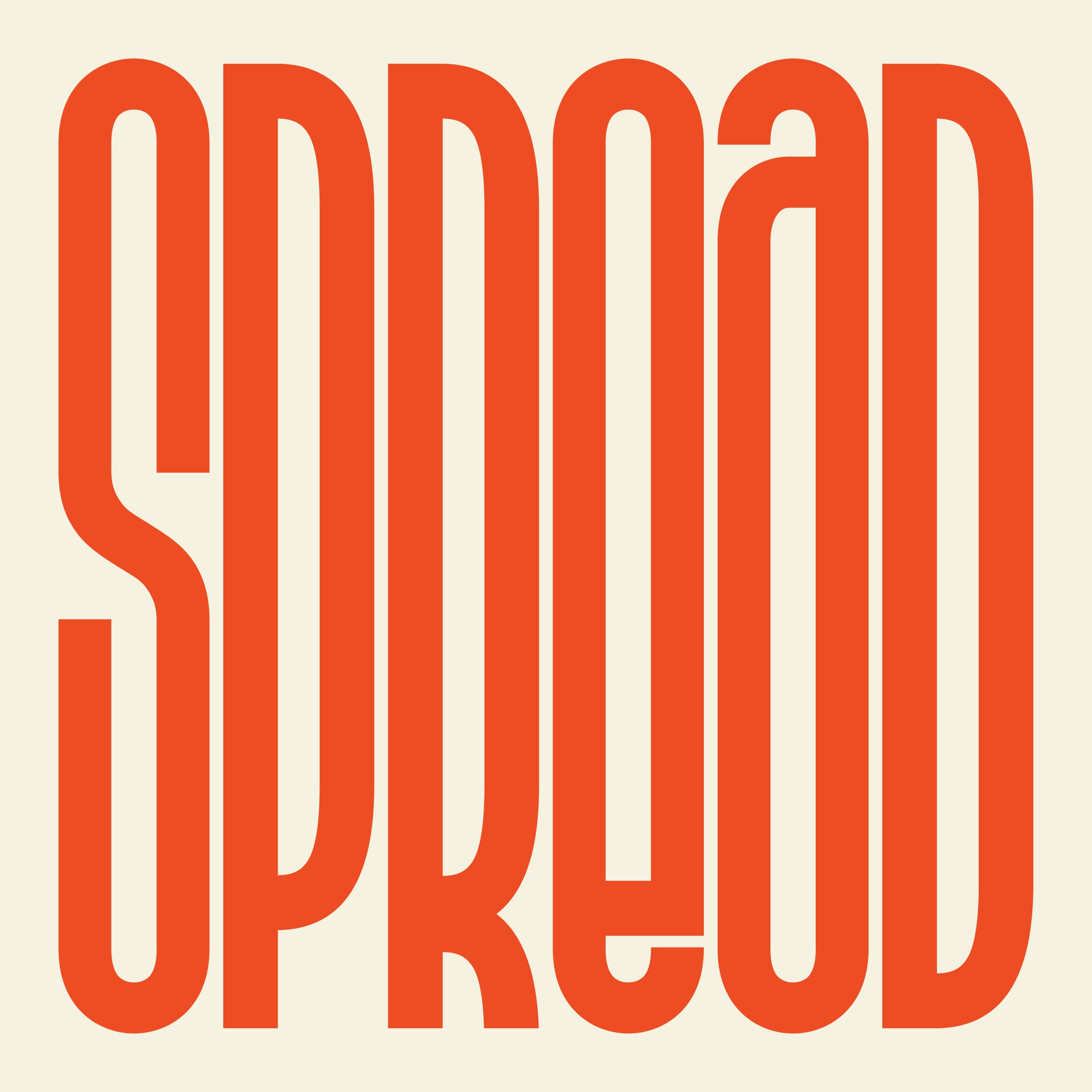
One technique we've found particularly effective is looking for semantic overlap between different concepts. When we were naming a financial services firm with a coffee roastery focus, we looked for words that carried meaning in both industries. We landed on Spread - in hospitality, it refers to spreading a table or spreading butter on toast; in finance, it's a term used in relation to money and equities. That double meaning wasn't just clever wordplay - it also supported the positioning of being more approachable and playful than a traditional finance firm, which was important because the audience was hospitality owners.
Generate volume. A good naming process produces hundreds of candidates - not five. Cast the net wide. Use word associations, etymology, foreign languages, compound words, portmanteaus, metaphors. The goal at this stage is quantity, not quality. You'll filter ruthlessly later. We try to go broad and wide, look under every rock, and see if there's any gold. There's no single technique that works every time - it's about building deep knowledge of the domain and then pushing the creative boundaries of what feels possible.
Screen and shortlist. Run every candidate through your criteria. Then check domain availability, trademark databases and a quick cultural sensitivity scan. What seemed like a brilliant name might already be trademarked in your category, or it might mean something unfortunate in Mandarin. The shortlist should be 5-10 names that pass every filter.
Test and validate. Say each name out loud. Repeatedly. In different contexts. "Hi, I'm calling from [name]." "Have you heard of [name]? They do brand strategy." "Check out [name].com.au." A name that looks great on paper but trips up in conversation has a fundamental problem. Test with people outside the project who haven't been marinating in the options for weeks.
What Makes a Good Brand Name
After going through the naming process enough times, patterns emerge. Good brand names tend to share certain qualities - not all of them, but enough to stand out. And it's worth saying upfront: there's no such thing as a perfect name. That's part of the balancing act. Naming is about finding a name that works well across enough dimensions, not one that's flawless on every measure.
Distinctiveness. It doesn't sound like everything else in the category. If every competitor uses "solutions," "global," "strategic" or "partners" in their name, those words are doing nothing for differentiation. A good name occupies its own space. See our low down on differentiation.
Memorability. People should be able to recall it after hearing it once or twice. Short helps, but it's not everything - rhythm, sound and meaning matter more. "Airbnb" is not a short name, but it's memorable because it tells a story in three syllables (air bed and breakfast).
Pronounceability. If people can't say it confidently, they won't say it at all. Every time someone hesitates before saying your name - "I think it's pronounced..." - you've lost a micro-moment of credibility. Avoid ambiguous spellings, unusual letter combinations and names that sound different from how they're spelled.
Scalability. Will this name still work in five years? Ten? If the business expands into new services, markets or geographies, does the name accommodate that? "Melbourne Web Design Co" works until you move into brand strategy, or open a Sydney office, or both. Names that are too specific create ceilings.
Emotional resonance. The best brand names make you feel something - even if you can't quite articulate what. There's a quality to words that goes beyond their dictionary meaning. "Drift" feels different from "Movement." "Forge" feels different from "Factory." The phonetics, the associations, the cultural connotations - they all contribute to an emotional response that either supports or undermines your positioning.

Alignment. A good name should create a certain set of ideas in people's heads that align with the business goals. Think of it this way: if all the intangible characteristics of your brand are cool, fresh and calm, but your name sounds hot, urgent and aggressive, those things are working against each other. Unless you're being really intentional about that contrast, the name and the strategy need to point in the same direction.
The Brand Naming Process
A structured brand naming process typically moves through distinct phases, and trying to skip or compress them is where most projects run into trouble.
Phase 1: Strategic brief. Define the business context, target audience, competitive landscape, desired positioning and naming criteria. This phase should involve the decision-makers - the people who will ultimately approve the name. Get alignment on the criteria before you start generating names, not after.
Phase 2: Name generation. This is the creative phase. Using the territories and techniques described above, generate a wide field of candidates. Aim for 200-300 names across different types and territories. Don't self-edit too early - weird ideas sometimes lead to great names.
Phase 3: Initial screening. Filter against the strategic criteria, check basic domain and trademark availability, and eliminate anything that doesn't pass the "say it out loud" test. You should be down to 20-30 candidates.
Phase 4: Deep screening. For the remaining candidates, do thorough trademark searches, check international availability if relevant, test linguistic and cultural associations across markets, and verify social media handle availability. Down to 5-10 finalists.
Phase 5: Contextual testing. Mock up each finalist in context - on a business card, in an email signature, on a website header, in a sentence describing the business. Names exist in context, not in isolation. A name that looks brilliant on a whiteboard might feel wrong on a shopfront.
Phase 6: Decision. Present the shortlist with rationale for each name. The decision-makers choose. This is often the hardest phase because naming is inherently subjective, and consensus can be elusive. Strong criteria from Phase 1 help enormously here - you're evaluating against agreed standards, not personal taste. Sometimes people naturally connect with a name immediately and it rolls off the tongue. Other times, a name is one that people warm up to over time. Both responses are valid - the important thing is that the name meets the strategic criteria, not that it gets an instant emotional reaction from the room.
Brand Naming and Brand Strategy
A name doesn't exist in isolation. It's one element within a broader brand strategy - and the relationship between naming and strategy goes both ways.
The strategy should inform the name. Your positioning, your audience, your competitive landscape, your brand personality - all of these inputs shape what the name needs to be. A luxury brand targeting high-net-worth individuals needs a different kind of name than a fintech startup targeting millennials. The strategy provides the constraints that make the naming process productive rather than aimless.
But the name also shapes the strategy that follows. Once you've chosen a name, it influences the visual identity, the tone of voice, the messaging framework, the brand experience. A playful name invites a different identity system than a serious one. The name sets a creative direction that everything else responds to.
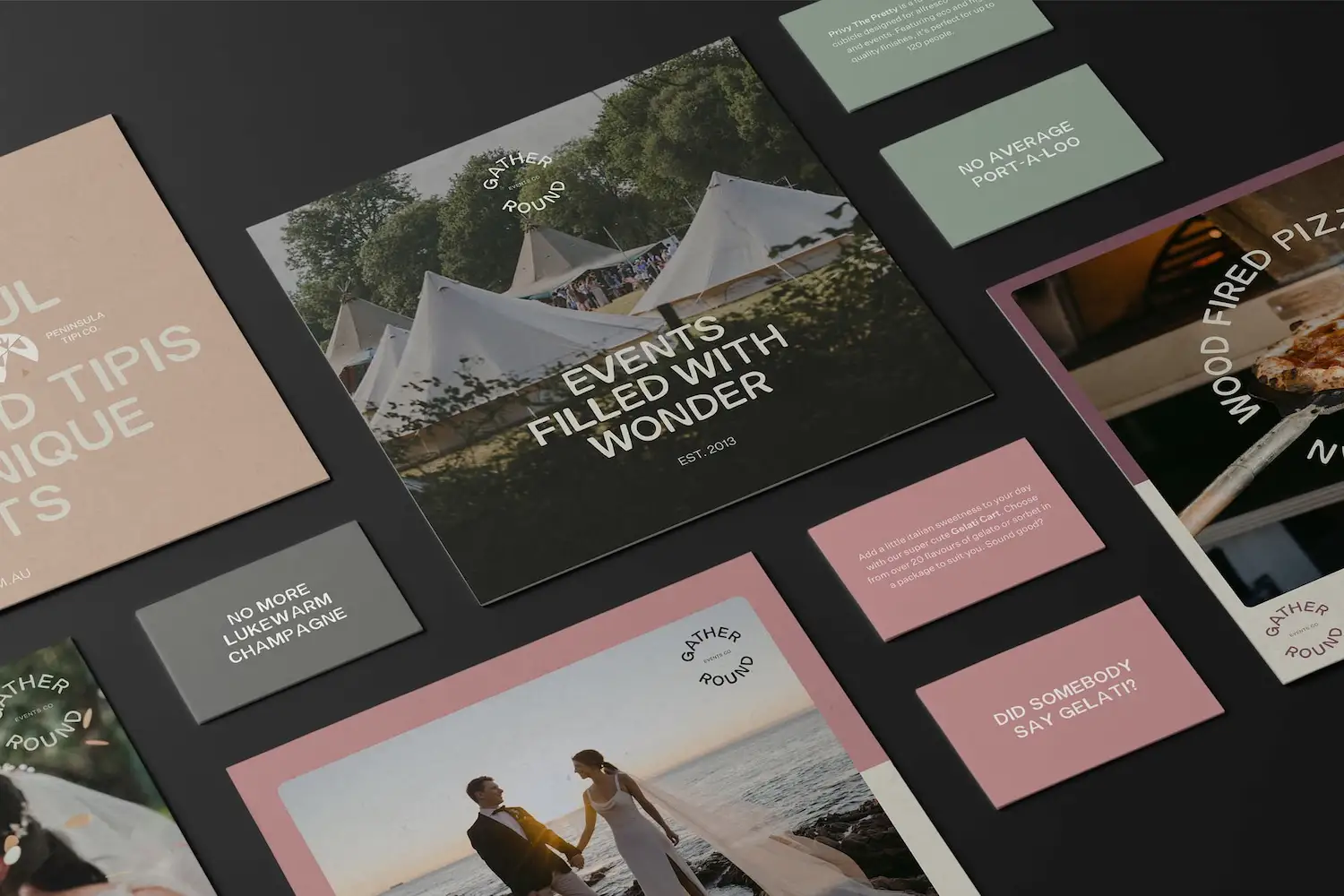
We've seen this play out clearly in our own projects. When we named Gather Round - a wedding and festival company that brings people together for celebrations - the name didn't just describe what they did. It also reflected the structure of the business itself, which brought together a series of unique offers: a pizza wagon, a teepee, specialty toilets, a gelati cart. The business literally gathered a collection of smaller experiences into one cohesive offering. That double layer of meaning gave us a strong creative foundation for everything that followed in the identity.
This is why naming should happen after the core strategic decisions are made (positioning, audience, differentiation) but before the identity and communication work begins. The name is the bridge between strategy and expression.
Common Brand Naming Mistakes
Having worked through naming projects across industries, the same mistakes come up repeatedly. Knowing them in advance can save months of wasted effort.
Naming by committee. The more people involved in the final decision, the more likely you'll end up with the safest, most generic option. Everyone vetoes the bold choices, and you converge on something inoffensive but forgettable. Keep the decision group small - ideally the founder or CEO plus one or two trusted advisors.
Falling in love too early. Someone comes up with a name in the shower, the whole team gets excited, and suddenly no other option can compete. Then the trademark search comes back negative, or the domain is taken, or it means something inappropriate in another language. Don't commit emotionally until the name has passed every filter.
Over-describing. Trying to explain everything the business does in the name. "Strategic Brand Solutions Australia" might be accurate, but it's not a name - it's a description. And descriptions don't build brands. Leave something for the tagline and messaging to do.
Chasing trends. Every era has its naming conventions. There was the wave of adding "-ify" to everything (Shopify, Spotify). The fashion and lifestyle trend of calling things "the label." More recently, the direct-to-consumer trend of using human first names - Harry's razors, Casper mattresses, Oscar Wylie glasses. These naming patterns work when they're fresh, but they place your brand firmly in a particular period. Depending on how the name ages, you might find yourself with something that feels dated - and you're stuck with a name that's incredibly difficult to change. A name that felt of-the-moment in 2018 might feel generic by 2028.
Ignoring phonetics. How a name sounds is as important as what it means. Hard consonants (K, T, P) create different impressions than soft ones (L, M, S). The rhythm of syllables matters. The way a name rolls off the tongue - or doesn't - affects how people feel about it on a subconscious level.
Skipping the trademark search. This should go without saying, but plenty of businesses fall in love with a name, build their entire brand around it, and then discover it's already trademarked in their category. Do the legal homework early. It's cheaper to change direction during the naming process than after you've printed 10,000 business cards.
Asking everyone's opinion. Your friends, your family, your accountant, your barista. The more opinions you gather from people who aren't your target audience, the more confused you'll become. At some point, too many opinions make it impossible to find clarity - and a good name should create clarity and focus. The only opinions that matter are: does it meet the strategic criteria? Does it resonate with the target audience? Everything else is noise.
Working with a Brand Naming Agency
Brand naming is one of those things that looks simple enough to do yourself. Pick a word. Register it. Done. And that perception is understandable - we all use words every day, so naming feels accessible in a way that, say, designing a logo doesn't. When you see a highly skilled designer's work, the expertise is visible. With naming, the expertise is invisible. The research, the strategic thinking, the hundreds of candidates that were generated and discarded - none of that shows up in the final word.
But the gap between a name that's adequate and one that genuinely serves the business is significant, and it usually takes professional help to bridge it. A brand naming agency brings structure, creative breadth and objectivity to a process that's otherwise dominated by personal preferences and internal politics.
When choosing brand naming services, look for agencies that lead with strategy rather than creativity. If the first question is "what words do you like?" rather than "what's the business problem this name needs to solve?", the process is backwards. The creative exploration should come after the strategic criteria are established.
Also look for agencies that can carry the name through to implementation - connecting it to the broader brand identity, messaging and visual system. A name on its own is just a word. It becomes a brand name when it's part of a coherent system.

Brand Names and Trademarks
The legal side of brand naming is not optional - it's foundational. A name that can't be trademarked is a name that can't be protected, and a name that can't be protected is a liability.
In Australia, trademark registration is managed through IP Australia. The process involves searching the existing register, filing an application, and waiting for examination - which can take several months. It's worth engaging a trademark attorney for this, particularly if you're operating across multiple categories or jurisdictions.
Different types of names have different levels of trademark protection. Invented and abstract names (like Kodak or Xerox) are the easiest to protect because they're inherently distinctive. Suggestive names (like Pinterest or Spotify) are also generally protectable. Descriptive names are the hardest - you can't trademark a generic description of what a business does. This is another reason to avoid purely descriptive naming.
Don't treat the trademark search as an afterthought. Build it into the naming process from the earliest stages. A name that's strategically perfect but legally unavailable is just a good idea that someone else had first.
Is it Time to Name (or Rename) Your Brand?
If you're launching a new business, the naming decision is obvious - you need a name before you can do anything else. But naming also comes into play during rebranding, when a business has outgrown its original name or when a merger or acquisition creates the need for a new identity.
The signals that a name isn't working are usually pretty clear. People can't spell it. They can't remember it. They confuse you with a competitor. The name describes something you used to do but don't anymore. It doesn't work in the markets you're expanding into. It carries associations that undermine your positioning. These are all signs that the name is working against the brand rather than for it - and every day spent with the wrong name is a day of brand equity being invested in the wrong asset.
Our advice? Don't overthink it, but don't underestimate it either. The name is the bridge between the intangible ideas and the visual identity, and it's the retrieval mechanism that lives in people's heads. Have a crack on your own first. See how you go. But don't ask too many people for their opinions, because at some point you'll just accumulate noise and lose focus.
If you're feeling stuck and there's no momentum, that's usually the signal to either reach out to a naming specialist for an initial conversation, or invest in building your knowledge through books or courses on the topic. Sometimes the right answer is a new name. Sometimes it's working harder with the name you've got. The right call depends on where your business is heading, and if you want to talk it through, we're happy to help.
Brand naming is the strategic process of creating a name for a business, product, service or initiative. It sits at the intersection of brand strategy, linguistics, legal viability and commercial pragmatism. A good brand name needs to be legally available, phonetically clear, culturally appropriate, domain-friendly and meaningful in a way that supports the brand's positioning. The name acts as the bridge between a brand's intangible qualities - its strategy, personality, tone and character - and the tangible identity that gets presented to the world.
Start with strategy, not creativity. Define your naming criteria first - the positioning the name needs to support, the audience it needs to resonate with, and the tone it should carry. Then explore broader conceptual territories and naming techniques like semantic overlap, etymology, metaphors and foreign languages. Generate hundreds of candidates, then filter ruthlessly against your criteria, domain availability and trademark databases. Test the shortlist out loud in real contexts. The best names often come from a lateral process rather than a linear one - looking for unexpected connections that click once you tell the story.
There are six main types of brand names. Descriptive names tell you what the business does (PayPal). Suggestive names hint at the brand's offering or feeling (Pinterest, Spotify). Abstract names have no inherent meaning (Kodak, Rolex). Invented names are newly created words (Accenture, Verizon). Founder names use the people behind the business (Hewlett-Packard, Ben & Jerry's). Acronyms shorten longer names (IBM, BMW). Each type comes with trade-offs in memorability, trademark protection and flexibility. Suggestive names often hit the sweet spot between meaning and scalability.
Good brand names tend to share several qualities: distinctiveness (standing apart from competitors), memorability (easy to recall after hearing it once or twice), pronounceability (people can say it confidently), scalability (still works as the business grows), emotional resonance (creates a feeling that supports the positioning), and alignment (the associations it creates match the brand's intangible qualities). No single name will be perfect on every dimension - naming is a balancing act of finding a name that works well across enough of these measures.
The signals that a name isn't working are usually clear: people can't spell or remember it, they confuse you with a competitor, the name describes something you used to do but don't anymore, it doesn't work in new markets, or it carries associations that undermine your positioning. Renaming also comes into play during rebranding, mergers or acquisitions. While changing a name is never trivial, the cost of keeping a name that actively works against your brand can be higher in the long run - every day with the wrong name is brand equity invested in the wrong asset.
Naming looks simple enough to do yourself, but the gap between an adequate name and one that genuinely serves the business is significant. A brand naming agency brings structure, creative breadth and objectivity to a process that's otherwise dominated by personal preferences. Look for agencies that lead with strategy - if their first question is "what words do you like?" rather than "what's the business problem this name needs to solve?", the process is backwards. Also look for agencies that can carry the name through to the broader brand identity, since a name becomes a brand name when it's part of a coherent system.

Marcel McCarthy is the Creative Director at ONETOO. He helps ambitious brands turn strategy into clarity — and clarity into action. Known for asking hard questions, dodging trends, and making bold ideas feel obvious (in hindsight).