If you've spent any time in a branding conversation, you've probably heard the term brand positioning. It gets dropped into pitch decks, strategy documents and LinkedIn posts like confetti. Everyone's doing it. Or at least, everyone says they are.
Can we be real? Most of what passes for brand positioning isn't really positioning at all. It's aspiration dressed up as strategy. It's a nice sentence on a slide that doesn't actually change anything.
And that's the problem. Brand positioning isn't a statement you write and file away. It's a set of decisions that should change the way you operate, communicate and compete. Every single day.
Let's get into what that actually means.
What is Brand Positioning?
Brand positioning is the deliberate act of defining how your brand occupies a distinct and meaningful place in the minds of your customers, relative to your competitors.
Read that again. Relative to your competitors.
As Jack Trout put it in his marketing classic Positioning, the real question is how to be seen and heard in an overcrowded marketplace. At its core, positioning is a battle for the mind.
And if you think about it that way - what are the things we can actually do to shift perception, belief and preference in the minds of customers? - you quickly realise that positioning goes well beyond brand identity and messaging.
It requires two things working together. First, the brand and communication side - how you present your position through visual identity, messaging, content and marketing. Second, and just as importantly, the product, service and operational side - how you actually deliver on that position in a tangible, meaningful way.
A brand position can't exist in the silo of a marketing document. It needs to lead to different choices, different actions, different decisions across the entire business. It's one thing to say "this is our position." It's another thing entirely to take the necessary actions to actually make that position real.
Think of it as mental real estate. Every category has a limited number of slots that people can hold in their heads. Cars? You've probably got space for five or six brands before things blur together. Coffee shops? Maybe three. Branding agencies? Probably two. The question is whether you're in one of those slots - and if so, what you're known for.
That's positioning.
Positioning is Not a Statement
One of the most common mistakes is to confuse brand positioning with a brand positioning statement. They're related, sure. But a statement is an output. A sentence. Positioning is the actual work and the ongoing commitment to a set of actions that establish your position in the market.
You can write the most beautifully crafted positioning statement in the world. If it doesn't lead to genuinely different choices, in what you offer, how you deliver it, who you serve and how you talk about it - it's just copywriting for your team.
A positioning statement might say: "We're the most innovative solution for mid-market SaaS companies." Cool. But what does that mean in practice? How are you more innovative? Says who? And does your customer actually care about innovation, or do they just want something that works?
The challenge I see most often with clients is that they mentally put branding into its own bucket. They see it as a one-off task, something you do during a rebrand and then move on from. But positioning is not a deliverable. It's a daily commitment.
Think about Apple. They're known for world-class brand marketing and storytelling. But what makes it work is that their product and service genuinely aligns with the story they tell. The positioning isn't just in the advertising - it's in the product design, the packaging, the retail experience, the ecosystem. Everything reinforces the same position.
A positioning statement is really an opportunity statement. It says: here's what we could be to the market. The question then becomes: what do we need to do to actually make that a reality? And the answer always has two parts - here's how we present this positioning (brand and communications), and here's how we execute on this positioning (product, service, operations).
Brand Positioning vs Brand Strategy
Here's where things get interesting - and where a lot of businesses trip up.
Brand strategy is the integrated set of choices that leads to specific actions across product and communication disciplines. It's the big picture.
Brand positioning is one critical element within that strategy. It's the part that answers: where do we play and how do we win in the minds of our audience?
Think of it as concentric circles. Brand strategy is the outermost ring - the overarching framework that contains all of the smaller parts. Positioning sits within that as one of the key inner rings. The brand strategy is essentially the sum of many parts, and a lot of the strategic work we do ideally points towards and reinforces the positioning or key idea at the centre.
This means positioning needs to come early. Before the identity. Before the messaging. Before the website. The identity, the messaging, the website - all of these elements should reflect the positioning. It's a foundational choice that everything else is built on top of.
Elements of Brand Positioning
If we're going to do this properly, what does good brand positioning actually require?
1. A clear category
What game are you playing? You need to define the category you're competing in - or better yet, create one. If you're a branding agency, you're competing with other branding agencies. But if you're a branding agency that specialises in challenger brands entering established markets? Now you've narrowed the playing field.
The more specific you are about the game, the easier it is to win.
2. A target audience that actually exists
Not "everyone." Not "businesses of all sizes." A real, defined group of people who share a common problem or aspiration that you're uniquely equipped to solve.
The temptation is always to go broad. More people, more opportunity, right? Wrong. You end up being mildly relevant to everyone and deeply relevant to no one. That's a positioning death sentence.
3. A point of difference that matters
This is the heart of it. Differentiation isn't about being different for the sake of it. It's about being different in a way that your target audience genuinely values.
Here's a quick filter: if your competitors could say the same thing about themselves, it's not a point of difference. "We deliver quality work" is not a differentiator. "We're the only agency that embeds a strategist in your team for 90 days post-launch" - that's starting to sound like one.
Remember, differentiation exists in the minds of customers, not on your slide deck.
4. A reason to believe
Claims need evidence. If you say you're the most strategic agency in Melbourne, you'd better have the case studies, the methodology and the client results to back it up. Positioning without proof is just posturing.
Two Ways to Play
Here's where it gets interesting. There are really two different positioning plays you can make.
The first is to carve out a distinct position within an existing category. You're competing in a known space, but you're finding a way to stand apart within it. This is the more traditional approach - trying to be more competitive in a category that already exists.
The second is to expand the category or create a new one entirely. Instead of fighting for share of an existing market, you're building a category of one. Instead of reaching an existing audience, you might be positioning to build a completely new audience around a new idea.
If you're familiar with Blue Ocean Strategy, this maps closely. The first approach is a red ocean play - competing in existing market space. The second is a blue ocean play - creating uncontested market space where the competition becomes irrelevant.
Both are valid. But knowing which play you're making changes everything about how you approach the work.
A Simple Brand Positioning Framework
If you want to cut through the noise and get to the core of your positioning, there are two frameworks worth using.
The first is the classic positioning template:
For [target audience] who [have this need or problem], [your brand] is the [category] that [key benefit or point of difference] because [reason to believe].
It's not revolutionary. But it forces you to make choices. And choices are the whole point.
The second is an onlyness statement:
We're the only [what you are] that [what you do differently].
This one cuts even deeper because it forces you to articulate what's truly unique about your position - not just different, but the only.
Let's look at a real example. Commonfolk Coffee operates in an incredibly competitive category - specialty coffee. The problem? Everyone claims to be specialty coffee, even though what that means varies wildly and no one really has a clear, consistent definition.
As part of our brand strategy and identity work with Commonfolk, we helped them identify a unique attribute that other specialty coffee roasters simply don't have: genuine, direct partnerships with farmers on the ground in producing countries. They pay above-market rates and support their farming partners throughout the season. Where most specialty coffee is sold through middlemen, distributors or wholesalers - and the roasters may never even know who grew the beans - Commonfolk works directly with the people behind the coffee.
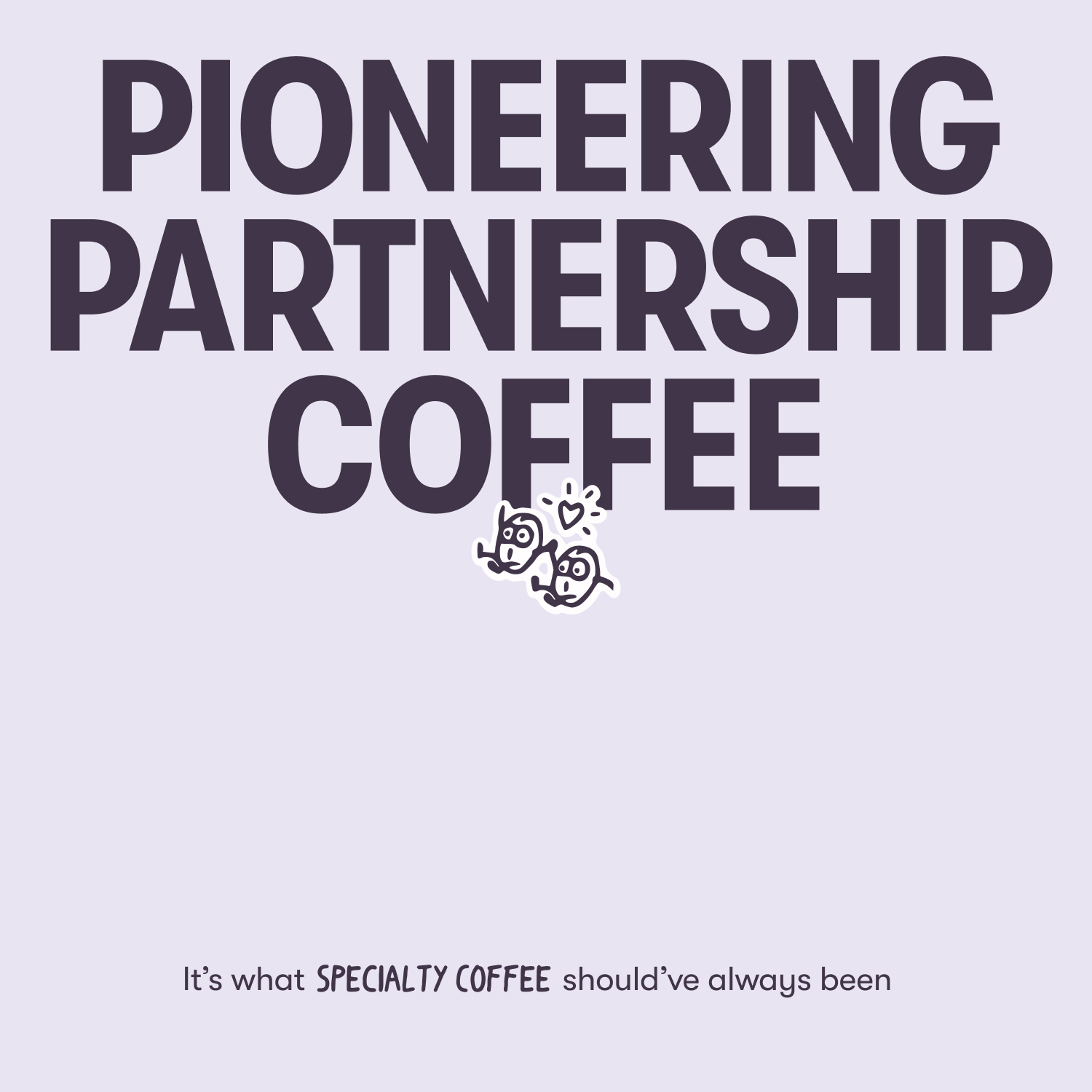
This led to the positioning of "partnership coffee" - a new sub-category that Commonfolk can credibly own. It's not just a label. It's backed by a genuinely different operational model. And it's incredibly difficult for competitors to copy or replicate.
Using the onlyness framework: Commonfolk is the only specialty coffee roaster that builds direct, ongoing partnerships with farmers - paying above-market rates and providing year-round support - to create partnership coffee.
Notice what happened here. They didn't try to out-position other specialty coffee brands within the existing category. They created a new space entirely. That's the blue ocean play in action.
Brand Positioning Examples That Actually Work
The best way to understand positioning is to see it in action. Here are a few well-known examples and what makes them work.
Volvo - Safety
Volvo has owned the "safety" position in automotive for decades. They didn't try to also be the fastest, the most luxurious or the sportiest. They picked a lane and committed. Everything from product engineering to marketing reinforces that single position. When you think safe car, you think Volvo. That's the power of disciplined positioning.
Apple - Creative Tools for Creative People
Apple didn't position themselves as the cheapest or even the most technically capable. They positioned around creativity, simplicity and design. Their audience isn't everyone who needs a computer - it's people who see themselves as creative, forward-thinking and design-conscious. The entire brand experience - packaging, retail, advertising, product design - reinforces this position relentlessly.
Aesop - Intelligence and Restraint
In a skincare market drowning in either clinical white or Instagram pink, Aesop carved out a position around intellectual sophistication and understated design. The store experience, product naming, literature-inspired messaging - it all creates a distinct world that specific customers deeply identify with.
Notice the pattern? Strong positioning is singular, consistent and built into every touchpoint. It's not a tagline. It's a system of choices.
The Positioning Map
A positioning map - sometimes called a perceptual map - is a visual tool that plots brands in a category against two key dimensions that matter to customers.
For example, you might plot design agencies on two axes: strategy-led vs execution-led (x-axis) and premium vs accessible (y-axis). Where each competitor sits on that map reveals the gaps - the white space where no one is playing.
That white space? That's opportunity.
But there are a couple of caveats. First, the axes you choose matter enormously. Plot the wrong dimensions and you'll find white space that exists for a reason - because no one wants to be there. The dimensions need to be things your target audience actually cares about. Price versus quality, for example, may not be the most insightful way to map a market.
Second - and this is important - a positioning map inherently frames your thinking within existing market definitions. It plots you against known competitors on known dimensions. That's useful when you're trying to find a distinct position within an existing category. But if the better play is to break out of the category entirely - to create a new space, as Commonfolk did with partnership coffee - then the map can actually be limiting. It keeps you thinking inside the boundaries of a market that you might be better off redefining.
A positioning map is a thinking tool, not a decoration. Use it when it helps, but don't let it constrain your ambition.
Common Brand Positioning Mistakes
A few traps to watch out for.
Positioning by aspiration rather than reality
Claiming a position you haven't earned. If you say you're the premium option, your pricing, your client list, your work quality and your experience all need to back that up. Customers will test your claims whether you like it or not.
Trying to own too many positions
The fastest, the cheapest, the most innovative, the most personal, the most strategic. You can't be everything. Positioning requires sacrifice. The things you choose not to be are just as important as the things you choose to be.
Confusing internal clarity with external positioning
Your team might know exactly what makes you different. But if your customers can't articulate it, you haven't positioned yourself. Brand lives in the mind of your audience, not in your internal documents.
Following the category instead of leading it
If your positioning sounds like everyone else in your category, you've described the category - not your position within it. The point is to stand apart, not fit in.
Positioning and Differentiation - Two Sides of the Same Coin
You might have noticed a theme running through this. Positioning and differentiation are deeply connected. You could argue that positioning is the strategic decision about where you'll be different and differentiation is the tangible expression of that decision.
We've written extensively about differentiation and the concept of onlyness - the idea that the most powerful brands are the only ones doing what they do, in the way they do it, for the people they serve.
Positioning is how you declare that onlyness to the world. It's how you stake your claim.
So, Where Does Your Brand Sit?
Here's the uncomfortable question. If we asked your top ten customers to describe what makes you different from your competitors, would they all say the same thing? Would they say anything at all?
If the answer is no, you've got a positioning problem. And no amount of beautiful design or clever marketing will fix that. You need to go back to the strategic foundation and make clearer, braver choices.
Positioning isn't a one-time exercise you do during a rebrand and then forget about. It's an ongoing commitment to showing up in a consistent, distinct and meaningful way. It should inform every decision - from the clients you pursue to the content you create to the way you talk about your work.
It's not easy. But the brands that get it right don't just compete - they lead.
Ready to define where your brand sits? Explore our brand strategy service.
Brand positioning is the deliberate act of defining how your brand occupies a distinct and meaningful place in the minds of your customers, relative to your competitors. It's not a tagline or a statement - it's the underlying strategic choice about where you compete and why someone would choose you over the alternatives.
Brand strategy is the integrated set of choices that guides all brand-related decisions across product and communication. Brand positioning is one critical element within that strategy - the part that answers where you play and how you win in the minds of your audience. If brand strategy is the architecture of a house, positioning is the plot of land you've chosen to build on.
A brand positioning framework is a structured approach for defining your position. A common format is: For [target audience] who [have this need], [your brand] is the [category] that [key point of difference] because [reason to believe]. It forces you to make clear choices about who you serve, what category you compete in, and what makes you different.
Volvo owns the 'safety' position in automotive. Apple positions around creativity, simplicity and design rather than technical specs or price. Aesop carved out intellectual sophistication in a skincare market full of clinical or Instagram-driven brands. The pattern is clear: strong positioning is singular, consistent and built into every touchpoint.
A positioning map (or perceptual map) is a visual tool that plots brands in a category against two dimensions that matter to customers. For example, you might plot agencies on axes of strategy-led vs execution-led and premium vs accessible. The white space on the map reveals where no one is playing - that's where the opportunity lies.

Marcel McCarthy is the Creative Director at ONETOO. He helps ambitious brands turn strategy into clarity — and clarity into action. Known for asking hard questions, dodging trends, and making bold ideas feel obvious (in hindsight).